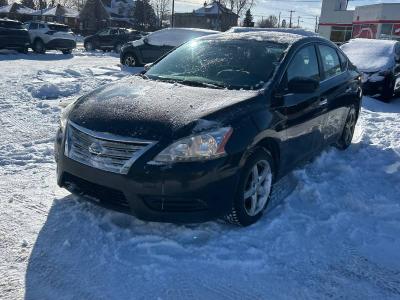
Want to sell your car to BonAuto instead of a scrapyard? We buy scrap, non-running or damaged vehicles in Saint-Joseph-du-Lac and in the Laurentians: sell your scrap car directly to BonAuto.
Looking for a scrapyard near you to get rid of an old car? Before dialling the first number you find online, take five minutes. “Cour à scrap” is the term everyone uses in Quebec, but in practice, what you are looking for is a licensed auto recycling centre, and a good share of the vehicles sent there out of habit are actually worth more as a trade-in than as scrap metal. Here is how it really works, what affects the price, and the SAAQ steps not to forget.
Scrapyard, car recycling, mise au rancart: different words for the same thing
In everyday language, “scrapyard,” “scrapping a car” and “car recycling” all mean the same destination: a licensed vehicle recycler (recognized networks such as ARPAC), which depollutes the vehicle, recovers the resalable parts and recycles the metal. Administratively at the SAAQ, this step has a specific name: taking the vehicle off the road (mise au rancart). Our guide on taking a vehicle off the road in Quebec details the three possible options (scrapping, gifting, selling) and the full comparison; this guide focuses on going through the scrapyard itself: car recycling, its price and its steps.
Does your vehicle really need to go to the scrapyard?
The scrapyard is for vehicles at the true end of their life: not repairable, seriously damaged, or with a frame eaten away by rust. Before sending your car there, check three things:
- Does it run and start? A working vehicle, even with repairs coming up, almost always sells for more than its value in metal.
- Is it still safe? Brakes, steering and tires in order: if so, it is still sellable.
- Have you checked its trade-in value? A free appraisal takes a few minutes and tells you right away whether you are in the right scenario.
If the three answers lean toward “yes, it still runs,” the scrapyard is probably not the best option for your wallet. See the “buyout or trade-in” section below.
What affects the price offered by a scrapyard
There is no fixed price or official scale for a vehicle sent for recycling: the amount offered varies from one recycler to another and with several factors, including:
- The weight and type of metal of the vehicle, since the value of the scrap itself fluctuates with the recycling market.
- The value of resalable parts: catalytic converter, rims, body parts in good condition, battery (including on a hybrid), etc.
- Towing: some recyclers include it for free, others deduct it from the amount offered.
Because the amount varies so much, the only way to know what your vehicle is really worth is to compare several licensed recyclers, and to check its trade-in value in parallel, which often exceeds the scrap value for a vehicle that still runs.
Price for scrapping your car: questions to ask before accepting
When people look for the “price for scrapping a car,” they often compare figures that do not measure the same thing. Before accepting an offer, ask each recycler the same questions:
- Is the amount firm or estimated? An estimate given over the phone can change when the vehicle arrives: ask what would make it vary.
- Is towing included or deducted? Two offers that look identical on paper are no longer identical if one removes the towing fees from the amount.
- What does the offer include? Catalytic converter, battery, rims: these parts weigh on the price, and a vehicle stripped before the recycler arrives is worth less.
- What proof will you receive? A transaction certificate from the licensed recycler protects your name. Without proof, do not hand over the vehicle.
The gaps from one offer to the next come mainly from the day's metal weight price, the resalable parts and the towing, the three factors seen above. Write down the amounts received and their conditions: it is the only way to compare honestly.
Selling your vehicle for scrap: the steps in order
- Confirm that it is really scrap. If it still runs, go through the free online appraisal first.
- Get at least two offers from licensed recyclers, with their conditions (see the questions above), or ask for BonAuto's.
- Gather your documents: ask the recycler what they require (usually the registration certificate). The guide on the SAAQ transfer details the usual documents.
- Arrange towing if the vehicle no longer runs, and remove your plate before it leaves.
- Keep the proof of transfer and the recycler's certificate, then complete the removal from the road with the SAAQ.
The SAAQ steps for handing a vehicle over to a licensed recycler
Once the decision is made, the transfer follows a precise framework to respect:
- Hand the vehicle over to a licensed recycler only. Avoid improvised scrap dealers who give no proof of transfer. Without that proof, your name can stay attached to the vehicle.
- Take the vehicle off the road: ownership passes to the dealer-recycler, who gives you a transaction certificate. An individual can do the step online with the SAAQ.
- Remove the plate: it stays in your name. You can destroy it, or keep it for up to 3 years to register another vehicle of the same category.
- Keep your records: the new registration certificate bearing the notation “Mise au rancart” and the recycler's certificate. If the vehicle is not at the end of its life but simply unused, SAAQ vehicle storage is an alternative to taking it off the road.
Source: SAAQ, Taking a vehicle off the road. For a sale to an individual rather than to a recycler, see our guide on the SAAQ transfer.
“Buyout” or trade-in: the option to check before the scrapyard
Many people looking for a “car buyout” in Quebec think first of the scrapyard, when they are actually describing what is called a trade-in: a dealership that buys your current vehicle, running, for its real market value, not for its metal. The difference can be counted in thousands of dollars. And if you are buying another vehicle at the same time, the trade-in value is deducted from the taxable amount, which reduces your taxes on the next purchase.
At BonAuto, in Saint-Joseph-du-Lac (Laurentians / North Shore of Montreal), we regularly assess vehicles that their owners thought were only good for the scrapyard. Before calling a scrapyard, have your vehicle appraised for free: it costs nothing and takes a few minutes. You can also read our guide on how to sell or trade in your vehicle for the best price, whether you are in Oka, Deux-Montagnes, Mirabel, Saint-Eustache or Blainville.
In summary
The scrapyard, meaning car recycling, is the right destination for a vehicle truly at the end of its life: not repairable, seriously damaged or eaten away by rust. Hand it over only to a licensed recycler, complete the ownership transfer at the SAAQ and keep your proof of transfer. But if your car still runs and is still safe, do not sell it cheaply for scrap without first checking its trade-in value: the difference is often worth a call before the one to the recycler.